

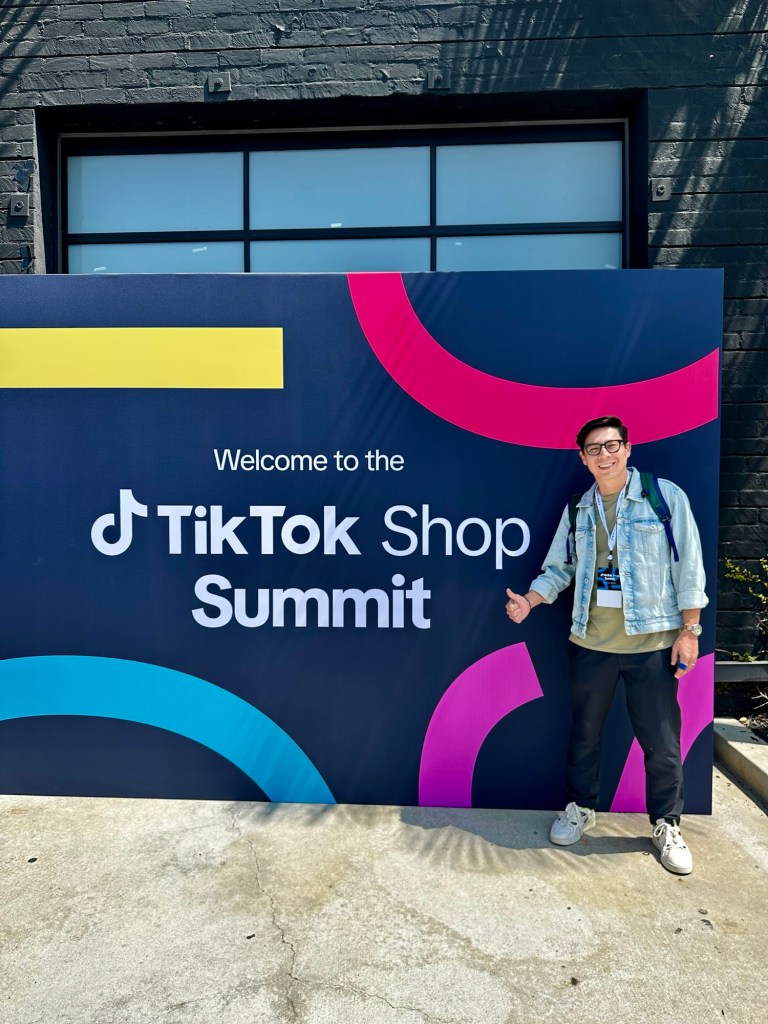
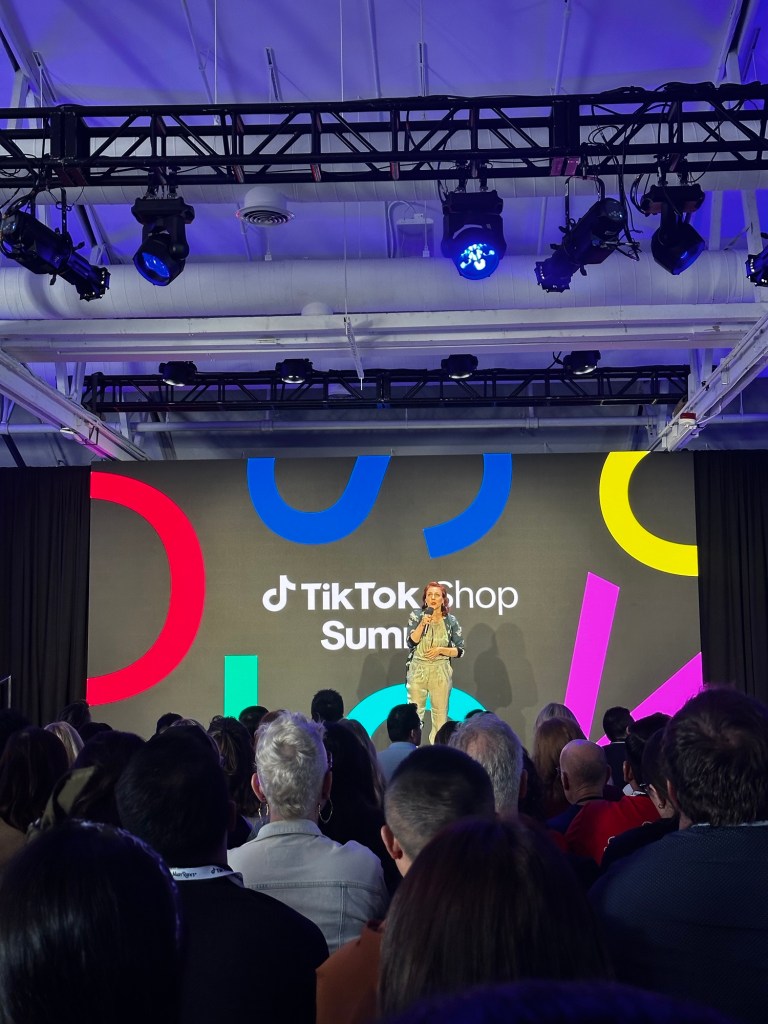
I traveled to Los Angeles to attend the first TikTok Shop Summit in the United States.
What I encountered there was not simply a new distribution channel or an incremental feature layered onto traditional e-commerce. It felt closer to the early architecture of a different commercial system.
For more than a decade, modern e-commerce has revolved around intent. The dominant model — perfected by Amazon — captures demand efficiently. A user searches for a product. The platform matches supply to that expressed need. Conversion follows. The system is optimized for precision, logistics, and friction reduction.
TikTok Shop operates on a fundamentally different premise.
Rather than capturing existing demand, it participates in creating it. Commerce begins not with search, but with attention. The feed replaces the search bar. Entertainment becomes the storefront. Influence compresses what used to be a multi-step decision cycle.
In this environment, users do not move from need to product. They move from narrative to desire.
That shift is not cosmetic. It is structural.
From Demand Capture to Demand Creation
Amazon built its dominance on organized intent. Its strength lies in logistics, search optimization, and conversion infrastructure — a system designed to respond to what customers explicitly declare they want.
TikTok’s strength lies elsewhere: in behavioral architecture.
Its algorithm does not wait for expressed need. It analyzes micro-signals — watch time, pauses, replays, shares — and builds predictive models of what might trigger impulse. The difference is subtle but meaningful.
Search is reactive.
The feed is generative.
One responds to declared intent.
The other shapes latent desire.
This is not merely “social commerce.” It is algorithmically amplified persuasion at scale — and it is measurable. Sellers are already generating significant revenue within this ecosystem, not because the overall market is larger, but because the path from attention to transaction has been shortened — and increasingly embedded within the content itself.
The Collapse of the Static Funnel
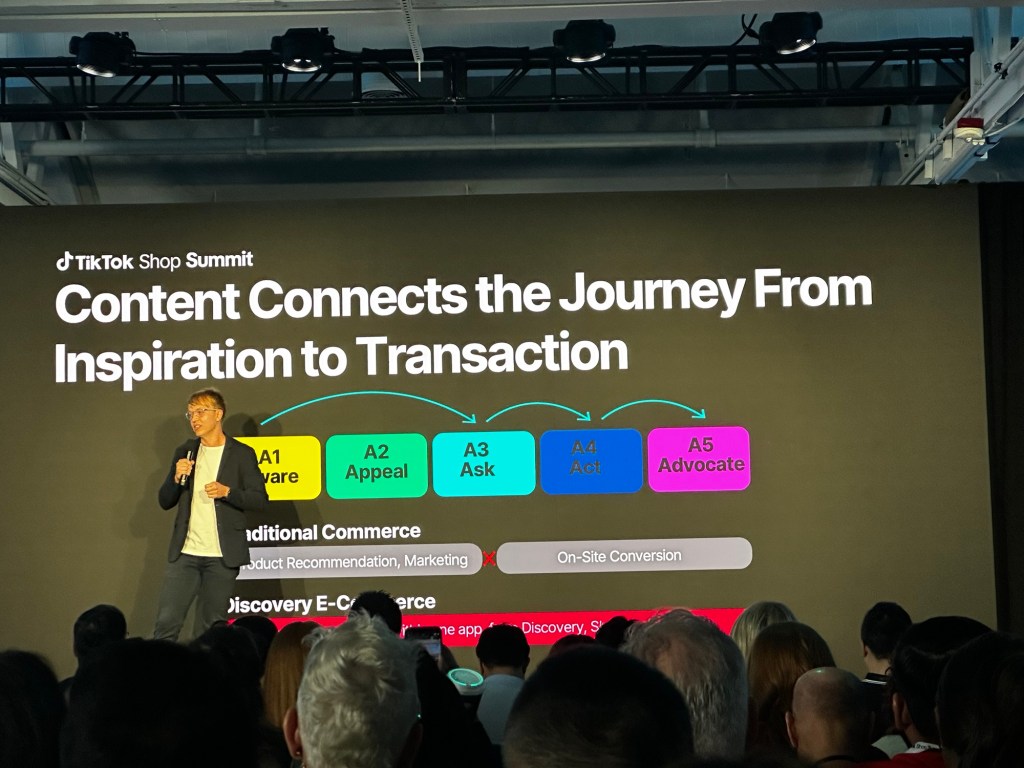
Traditional marketing assumed stages: awareness, consideration, purchase. TikTok compresses them.
A creator demonstrates a product. The viewer watches. Trust transfers. The purchase can occur within seconds. The separation between content and commerce dissolves.
Brand equity, in this model, is no longer built solely through paid traffic and keyword dominance. It is built through narrative velocity and algorithmic amplification. Operators who continue optimizing only for bottom-of-funnel conversion risk misalignment with how discovery is evolving.
A Different Competitive Logic
Amazon has faced many competitors over the years, but most competed within the same logic — better prices, faster logistics, broader assortment.
TikTok competes at a different layer.
Amazon organizes supply around expressed demand.
TikTok organizes demand around engineered exposure.
Both models are powerful. They simply operate on different aspects of human behavior.
The relevant question is not which platform wins. It is how the balance of power shifts when attention becomes the primary asset and discovery becomes continuous rather than episodic.
Los Angeles as Context
Los Angeles feels like a fitting backdrop for this shift. It is a city where creators function as infrastructure, where culture precedes commerce, and where narrative drives value.
During the same trip, I experienced a fully autonomous Waymo ride — a vehicle navigating public streets without a driver. What once felt experimental is now operational. The future rarely arrives with drama. It integrates quietly until it feels ordinary.
Commerce appears to be undergoing a similar normalization.
What This Means
The next decade of commerce will not be defined solely by better logistics or faster delivery. It will be shaped by systems that integrate content and transaction seamlessly, convert attention into demand algorithmically, and align creator economies with supply chains.
Artificial intelligence will not only predict behavior — it will increasingly shape it.
This is not the end of marketplaces. It is the emergence of a more layered commercial ecosystem.
Search will remain.
Discovery will expand.
Intent will matter.
Influence will compound.
Los Angeles was the location.
The deeper takeaway is this: commerce is not merely evolving. It is being rewired.
— Luis
 Luis Canedo©
Leave a comment